
5 Reasons to Study Sanskrit
Aug 18, 2026
You may often hear that Sanskrit (like Latin), is a "dead language." At Yogic Studies, where more than 1,000 students worldwide have studied Sanskrit with us online, we could not disagree more.
Here are our top 5 reasons why you should study Sanskrit today:
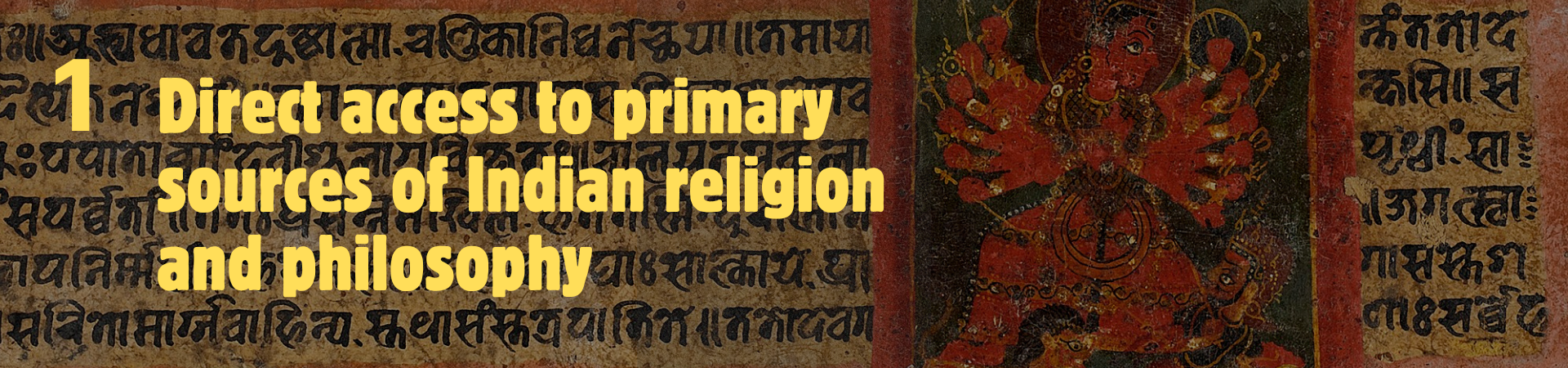
- Read sacred texts in their original language without relying solely on translations.
- Immerse in ancient scriptures like the Vedas, Upaniṣads, Epics (Mahābhārata, Rāmāyaṇa), Purāṇas, Dharmaśāstra, Yogasūtra and its commentaries, Vedānta, Śaiva/Śākta Tantras, as well as Buddhist and Jaina śāstras.

- Sanskrit is the classical language of South Asia and the oldest attested Indo-Aryan language.
- It is first preserved in the Vedic corpus (c. 1500–500 BCE) and later standardized as Classical Sanskrit through Pāṇini’s grammatical system (c. 4th cent. BCE).
- For over two millennia it has functioned as a pan-regional medium of scholarship, ritual, philosophy, poetry, science, and law—yet transmitted for centuries through refined pedagogy and learning.

- Most premodern Yoga texts are written in Sanskrit.
- Gain access to foundational texts like the Yogasūtra, Gorakṣaśataka, Dattātreyayogaśāstra, Haṭhapradīpikā, and more.
- Recognize and interpret key terms (e.g. dharma, ātman, brahman, karma, mokṣa, puruṣa, prakṛti, prāṇāyāma)—within their native linguistic environments.
- Improve your pronunciation and understanding of key words, āsana names, and mantras.

- The Sanskrit literary tradition ranges from Vedic hymns to classical kāvya (poetry) and drama, marrying rigorous metrical craft with a highly theorized aesthetics of alaṅkāra (figural ornament) and rasa (emotive savor).
- Across epics, court poetry, plays, and devotional lyric, Sanskrit operated as a transregional cosmopolitan medium whose literary style and culture has shaped intellectual and artistic life across South and Southeast Asia for over two millennia.
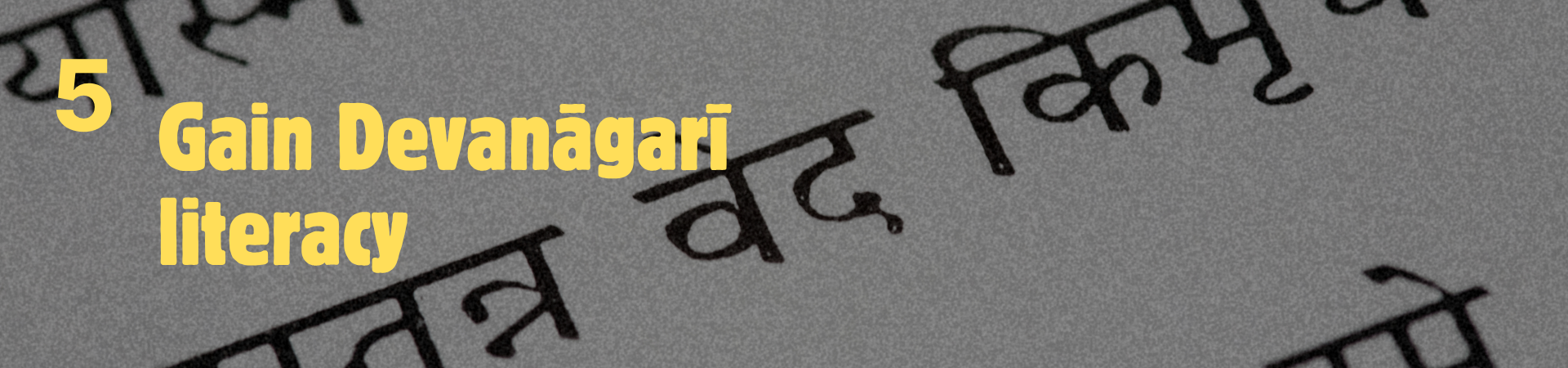
- Historically Sanskrit has been written in many regional scripts, from Brahmi to Grantha to Khmer.
- Most commonly today it is written and printed in Devanāgarī, lit. the “abode of the gods.”
- Learning to read and write the Devanāgarī script opens doors to printed Sanskrit literature and manuscripts, and also supports the study of other related languages (e.g. Hindi, Marathi, Nepali), which also use the same alphabet.

- SKT 101 | Elementary Sanskrit I, our beginner class begins the week of September 14, 2026. Attend live on Zoom, or watch the recordings and study at your own pace.
We only open our 101 courses once a year, so don’t miss out!