
Aleix Ruiz-Falqués Studying Pali, the Language of the Earliest Buddhist Canon
About this episode
In this episode, we speak with Dr. Aleix Ruiz-Falqués about his beginnings as a scholar of Pali, his research into Pali grammar, and how reading Buddhist texts in original languages can help us appreciate them in a new way. We discuss common questions about Pali, such as: what are the differences between Pali and Sanskrit? Did the Buddha speak Pali? Why study Pali? We also preview his upcoming online course, PALI 101 | Elementary Pali, which will explore these issues in more depth!
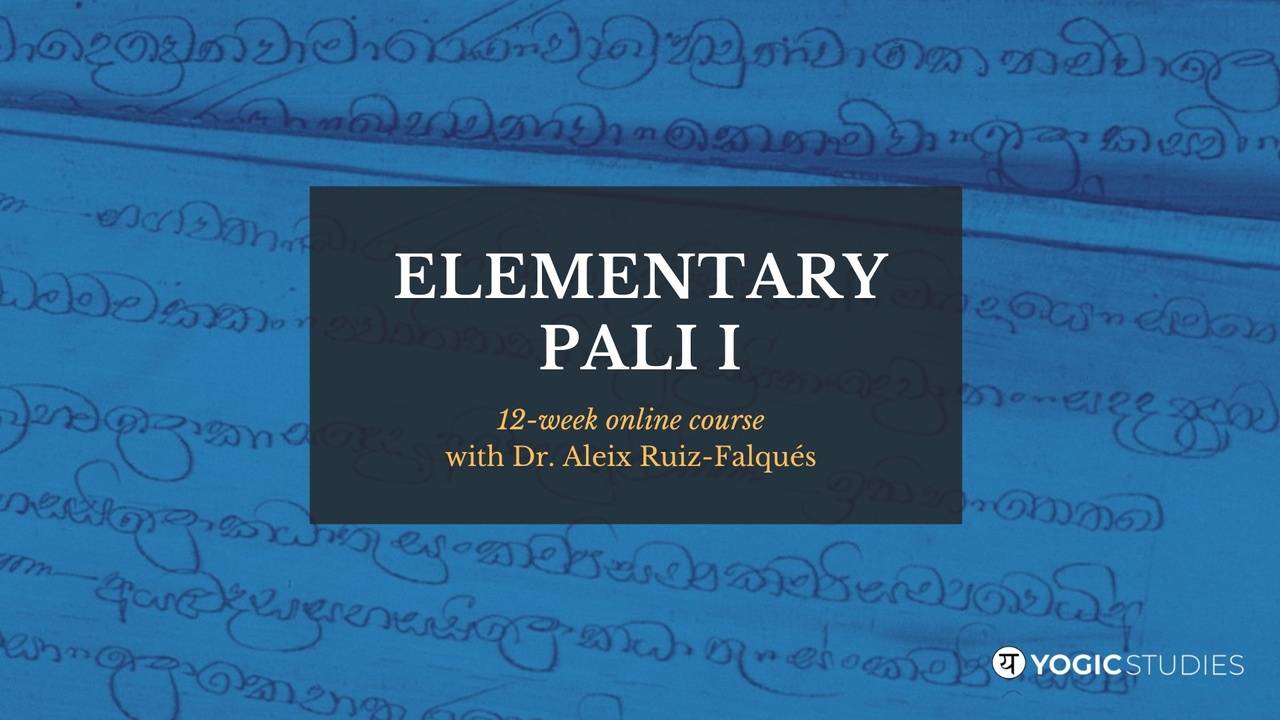
Begin reading the Buddhist suttas in Pali with Dr. Aleix Ruiz-Falqués: a 12-week live Zoom course, the first of three terms in Elementary Pali.
View the course AR
ARDr. Aleix Ruiz-Falqués is Head of the Department of Pali and Languages at the Shan State Buddhist University, Khyentse Postdoctoral Research Fellow in Buddhist Studies, and Lecturer of Pali at the Hebrew University of Jerusalem.
He teaches graduate courses in Pali language and literature in Taunggyi, Myanmar. Aleix completed his PhD at the University of Cambridge in 2016, under the supervision of Prof. Eivind Kahrs. His research focuses on traditional grammar and scholasticism in Pali, particularly in Myanmar. More broadly, he is interested in ancient Indian literature (kāvya) and philosophy or knowledge systems (śāstra).
After completing his PhD, Aleix worked for two years on Pali manuscripts in Thailand, and he spent one year doing independent research in India. In 2018, he moved to the Shan State in Myanmar, where his long-term project is to teach and learn the Pali and Burmese languages and literature in a traditional monastic setting. One of his long-term goals is to reveal and demystify the treasures of the Pali medieval tradition that explain how we still possess the ancient words of the Buddha today.
Website: www.kabbasetu.com
Links & further reading



Stay Informed
Sign up for the Yogic Studies mailing list to find out first about upcoming courses, podcast episodes, promotions, events, and the latest research delivered straight to your inbox.
