Reviving Sanskrit in Pakistan with Dr. Shahid Rasheed
Dec 22, 2025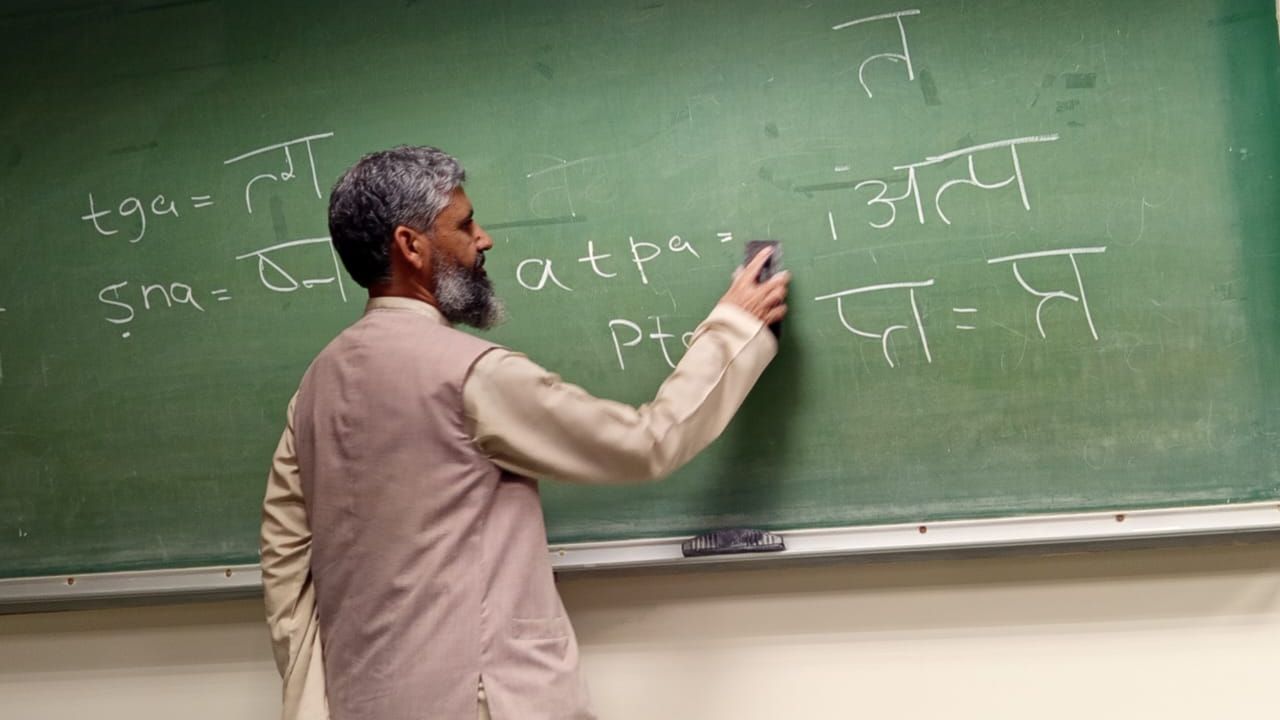
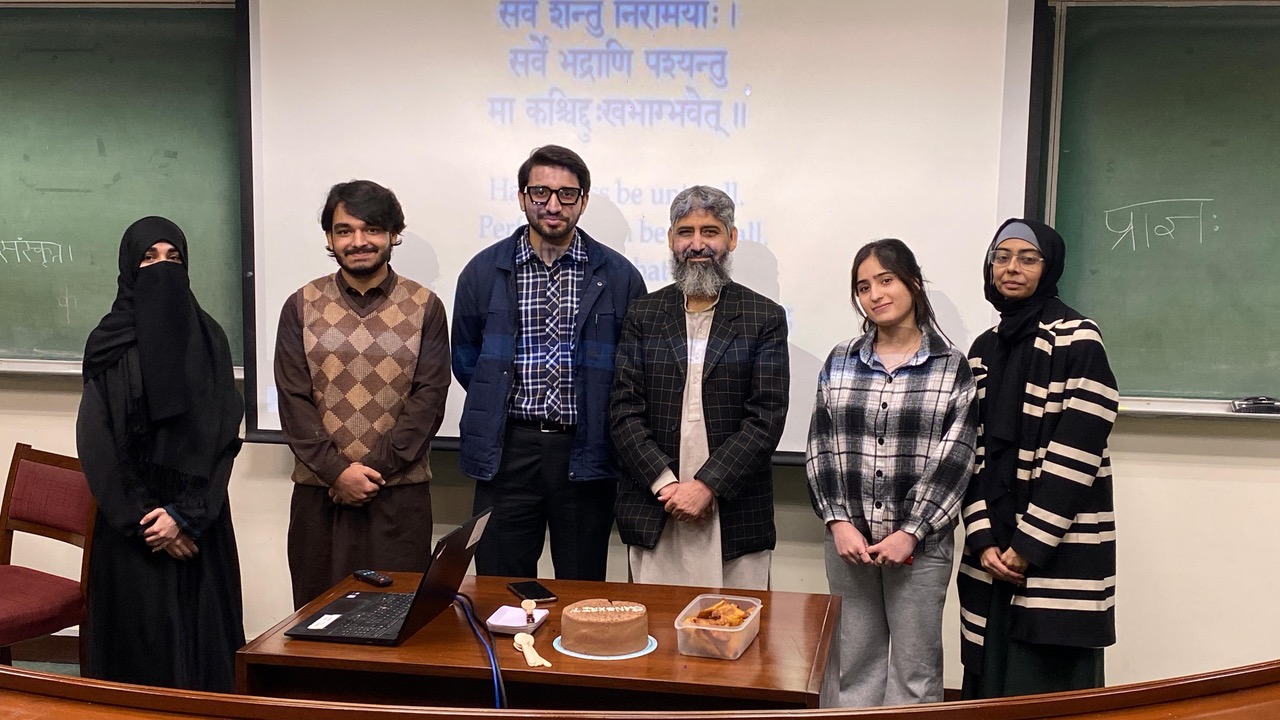
We recently interviewed Dr. Shahid Rasheed, who after studying Sanskrit for a year online at Yogic Studies, began teaching Sanskrit to students at The Lahore University of Management Sciences (LUMS) in Lahore, Pakistan. We discuss his academic background, the impact of Yogic Studies on his teaching and career, and how the recent Sanskrit course in Pakistan made international news.
While there have been other efforts, this marks one of the few for-credit university courses in Sanskrit offered in Pakistan since prior to Partition. Yogic Studies is incredibly inspired by Dr. Rasheed's efforts to revive classical Sanskrit education in Pakistan, and we are proud to have played some small role in this initiative.
1. Tell us a bit about your educational background. How did you come to study and teach classical languages?
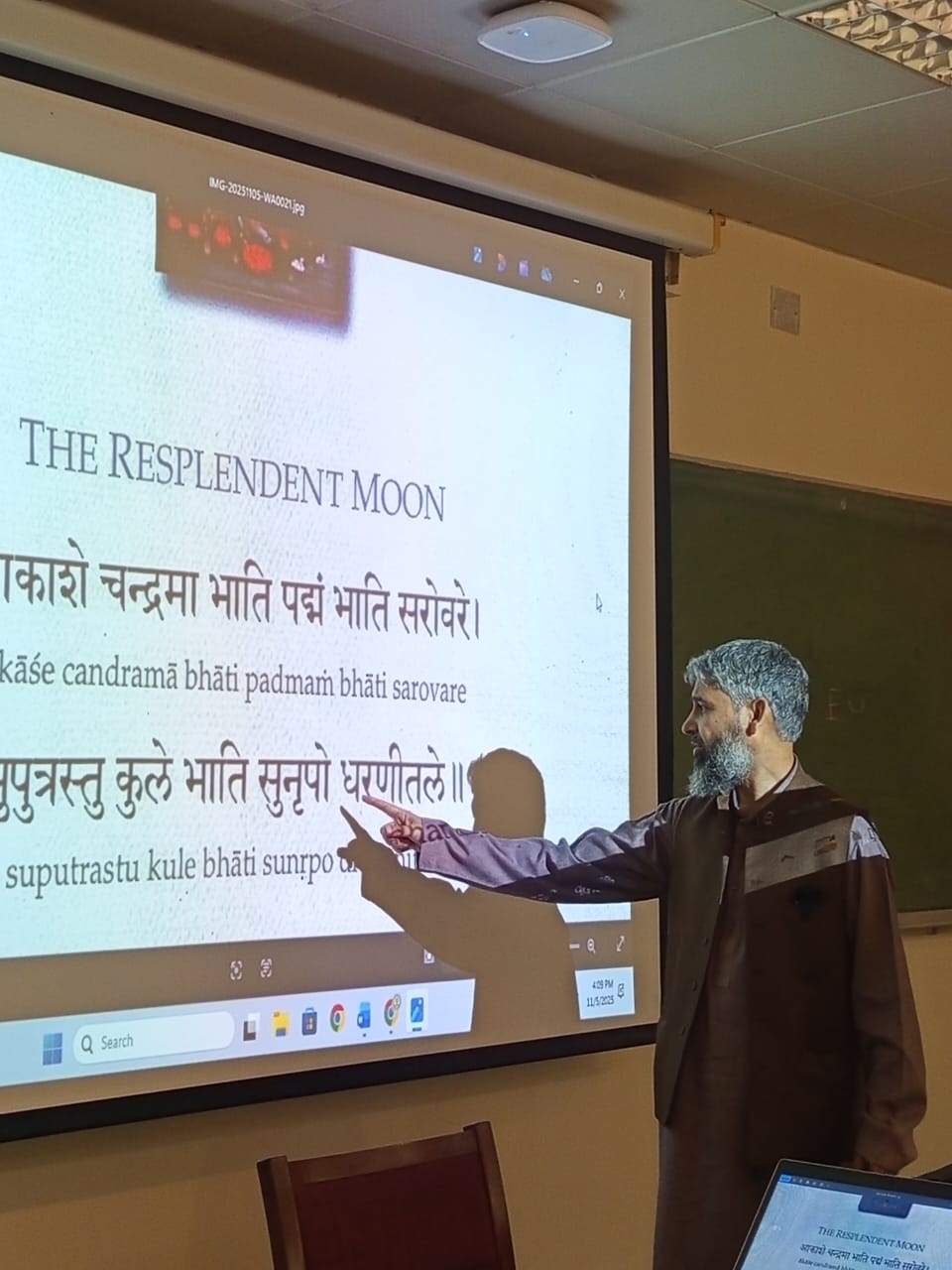 My academic journey has not been linear. I began with undergraduate studies in electrical engineering and then law, fields that trained me in precision and structure. Over time, however, my interests shifted toward deeper questions about society, meaning, and human thought. This led me to study sociology, and eventually to pursue a PhD in Islamic Thought and Civilization. I now teach sociology at Forman Christian College, Lahore.
During my university years, I found myself increasingly drawn to the great wisdom traditions of humanity. I wanted to understand them not secondhand, but through their own voices. That desire gradually pulled me toward classical languages—first those connected to Islamic intellectual history, and ultimately Sanskrit, which opened a new window onto the philosophical and spiritual heritage of South Asia.
2. How did you first find Yogic Studies? What have you studied on the platform?
I had long been searching for a way to study Sanskrit in Pakistan, but I could find neither suitable books nor a teacher. Hoping to explore options online, I mentioned this to a friend who was pursuing his PhD at ANU. He told me about a Sanskrit professor there and suggested I reach out.
I wrote to Professor McComas Taylor, and his guidance completely changed my path. He encouraged me to study seriously and introduced me to Yogic Studies. Through the platform, I completed three elementary Sanskrit courses, which gave me a solid foundation and, more importantly, the confidence to continue learning and eventually begin teaching Sanskrit myself. I understand however that I am a beginner and I have to take many more courses of sanskrit language and literature.
3. How has your experience studying with Dr. Antonia Ruppel been?
Studying with Dr. Antonia Ruppel has been profoundly influential for me. What makes her teaching so extraordinary is that it is not just in her words, but in her very presence. Every gesture, every pause, every way she listens seems to teach. Of course, when she explains the language, her clarity, patience, and rigor shine through—but even beyond that, her entire being models a way of engaging with Sanskrit: attentive, thoughtful, and alive. Studying with her has shaped not only how I understand the language, but also how I approach teaching it to others.
4. How has Yogic Studies impacted your life and career?
Yogic Studies opened a door for me at a time when I had few options in Pakistan. Being able to access high-quality Sanskrit education from home was transformative—not just in learning the language, but in showing me that this path was possible. More than anything, it gave me the confidence to imagine teaching Sanskrit myself, in a place where it is rarely offered. In many ways, my journey into teaching Sanskrit would not have begun without Yogic Studies.
5. How did the Sanskrit course in Lahore first come about? What is the significance of offering Sanskrit classes in Pakistan?
After completing my three elementary Sanskrit grammar courses with Dr. Antonia Ruppel, I was looking for an opportunity to teach. I knew that Sanskrit was deeply needed in Pakistan—a land closely connected to Pāṇinī and the roots of an entire civilization. Sanskrit, I felt, could open hearts, foster understanding, and challenge long-held stereotypes about “the other.”
By chance, I met Dr. Ali Usman Qasmi, the director of the Gurmani Center of Languages and Literature, who immediately welcomed the idea of teaching Sanskrit at LUMS. It felt like the right moment to begin. Teaching Sanskrit in Pakistan, I hope, will have a far-reaching impact: helping people connect more deeply with their ancient heritage, understand the historical and cultural links across South Asia, and contribute, in a small but meaningful way, toward peace and harmony.
6. What has surprised you the most since the story has been picked up internationally?
I have been most surprised by the warmth and generosity of the response. People from very different backgrounds have seen this not as a controversy, but as a hopeful gesture toward learning and dialogue. That response has been deeply encouraging.
7. What is your hope for the future of Sanskrit studies in Pakistan?
I am very hopeful about the future of Sanskrit in Pakistan. If I am able to continue this work over the next few years, Insh'allah, I hope to build a small but vibrant Sanskrit community here. There are many resources and archives in universities across Lahore that have never been fully explored, and I see great potential in making them accessible. My hope is that Sanskrit will be approached simply as an academic subject—studied with the same openness as Arabic, or Persian. If this small beginning encourages curiosity, mutual respect, and deeper engagement with our classical thought, it will have achieved something meaningful. I feel deeply committed to this cause and excited for what lies ahead.