
YS 218 | The Yogavāsiṣṭha
Instructor: Dr. Tamara Cohen
Status: Available for self-study
Course Description
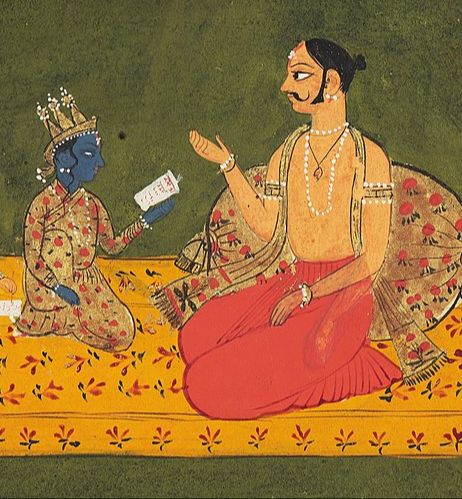
The Yogavāsiṣṭha (11-14th century CE) is one of the most influential philosophical-literary works in the history of Yoga in South Asia. Told as an extended dialogue between the young prince Rāma and the sage Vasiṣṭha, its teachings revolve around the nature of consciousness, the unreality of the world, and the means to liberation through self-knowledge and breath-awareness. For centuries, the Yogavāsiṣṭha has circulated throughout the Indian subcontinent through translations, abridgements and commentaries in many Indian languages, including Tamil, Hindi, Marathi, and Persian, particularly linked with Advaita Vedānta.
The central narrative expands a scene from the Vālmīki Rāmāyaṇa. When the sage Viśvamitra comes to town, young prince Rāma is in a state of despondency. Having recently returned from a pilgrimage to the sacred sites of India, he now realizes the transitory and illusory nature of worldly life. Seeking a means to overcome his despair, he begs for instruction on how to achieve liberation. Vasiṣṭha—the family priest—responds with a teaching on the mind, consciousness, causality, and the path to awakening from false perception. The world, he argues, is a projection of the cosmic mind, like a dream, and true freedom lies in finding the mind-space beyond all imagining.
However, the Yogavāsiṣṭha is not the earliest form of this work. The oldest recoverable version is the Mokṣopāya, traced to Kashmir around 950 CE. Although the two texts share the same central narrative and many of the same stories, the Mokṣopāya differs in its doctrinal orientation: it avoids Vedānta terminology, rejects scriptural authority, and lacks the story-frames added in the Yogavāsiṣṭha. Over the past twenty years, scholars of the Mokṣopāya Project (Halle, Marburg, and Mainz) have produced a critical edition and complete German translation, clarifying the earliest form of the text and its relationship to later recensions.
Course Textbook
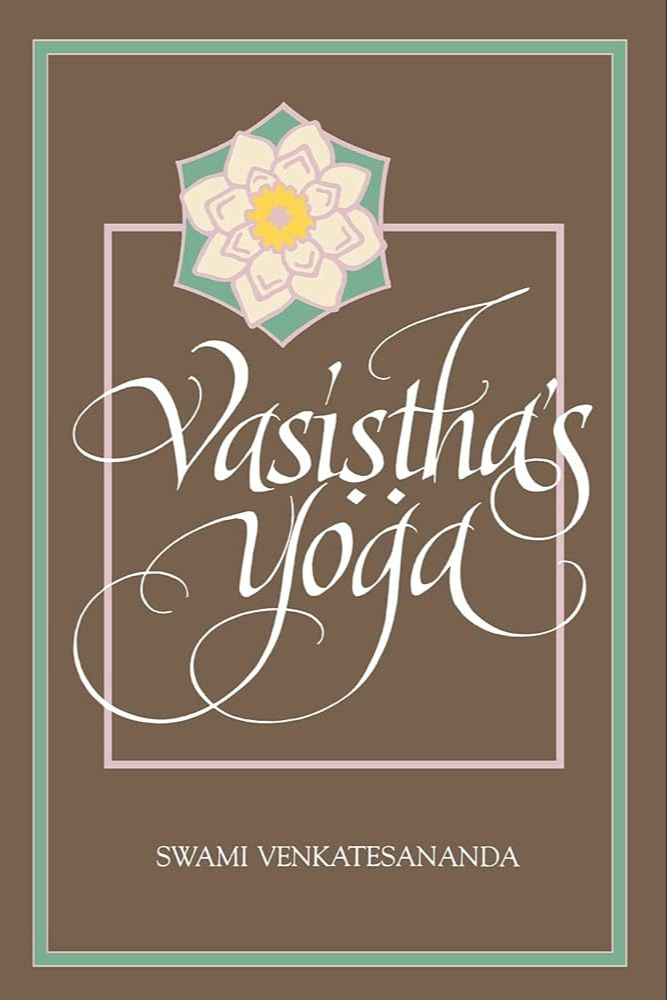
In this course, we will read together the English translation of the Yogavāsiṣṭha by Swami Venkatesananda (readily available online) which offers a highly accessible entry point for students. Though it reflects the limitations of the underlying recension and contains some philological issues, it remains the most usable version for an English-language course aimed at a broad audience. Over the course of six weeks, we will read together key stories from this translation, highlighting points where the Mokṣopāya and the Yogavāsiṣṭha diverge; we will examine subtleties in terminology, structure, doctrinal emphasis and philosophical orientation.
Students Will Receive:
- 12 Pre-recorded class sessions (90 min each)
- 5 YS Credits
- 18 Hours of CE credit with YA
- Course Syllabus (PDF)
- English translation of the text (PDF)
- 6 Multiple-choice quizzes
- Yogic Studies Certificate (PDF)
- Access to the private Community Forum
Dr. Tamara Cohen
Ludo and Rosane Rocher Foundation Fellow (2024-2026) at the University of Virginia
Tamara is the Ludo and Rosane Rocher Foundation Fellow for 2024-2026 at the University of Virginia, where she works with John Nemec on the connections between the Mokṣopāya, a text from mid-10th century Kashmir, and nondual Tantric Śaivism. Tamara completed her PhD in 2023 at the University of Toronto under the supervision of Srilata Raman in Toronto and Jürgen Hanneder in Marburg, Germany. Tamara's research touches on the early history of Yoga, nondual philosophy in Hinduism and Buddhism, and Sanskrit literary traditions. Her book (in process) revises her dissertation, tracing the textual affiliations of the Mokṣopāya using the stories that depict the body and its transformations on the path to liberation. In the book, she shifts her focus from historical context to a study of the text’s Yoga system. Tamara has been a practitioner of Siddha Yoga Mediation since 1994 and she completed a 300 hour Yoga Teacher Training in 2018 at Ahimsa Yoga in Toronto. In 2022, Tamara became certified in Integrated Attachment Trauma coach, Gibson Method.

Enrollment is OPEN for Self-Study
This course is eligible for 18 hours of Continued Education (CE) credits with Yoga Alliance
Stay Informed
Sign up for the Yogic Studies mailing list to find out first about upcoming courses, podcast episodes, promotions, events, and the latest research delivered straight to your inbox.