
BS 501 | Buddhist Studies Graduate Seminar
Instructor: Dr. Kate Hartmann
Dates: Sep 16 - Dec 9, 2026
Meetings: Wed 10-12:30pm PT
Course Description
BS 501 is the capstone experience of the Buddhist Studies Advanced Certificate Program (BSACP). Students arrive at this seminar having completed 2–3 years of concentrated university-level study—surveying the full arc of Buddhist history, philosophy, textual traditions, and contemplative practice, from the earliest teachings of the Pāli Canon to the living traditions of Tibet, East Asia, and global contemporary Buddhism—and having undertaken basic training in a classical Buddhist language.
The seminar brings this learning into focus. Working in a small cohort with Dr. Hartmann, students deepen their understanding through close reading, scholarly discussion, and a self-directed research project developed over the course of the term. BS 501 is designed both to consolidate graduate-level knowledge and to prepare students for further academic study, independent research, or teaching in the field of Buddhist Studies.
The course culminates in the BSACP Graduate Symposium, where students present their research to fellow graduates and the broader Yogic Studies community—marking the formal completion of the Advanced Certificate Program.
To be eligible for BS 501, students must have first completed 62 credits of coursework for the BSACP.
Course Structure
The seminar will take place online in a live format for a period of three months. The seminar will meet on Zoom for a total of 7 sessions. Readings will be provided which students should complete in advance of each session and be prepared to participate in discussion.
Note: Live attendance is required for the Seminar. Students can miss up to two live sessions if they have personal exemptions.
Seminar Sessions (2.5 hours)
- Wednesdays, 10:00–12:30 pm Pacific
(2.5 hours each) - Sep 16, Sep 30, Oct 14, Oct 28, Nov 11, Nov 25, Dec 9*
*The final session will be reserved for the Graduate Symposium.
In addition to the scheduled Seminars, Dr. Hartmann will also be holding private Office Hours to support students individually with their research projects.
Final Exam
A final exam will be issued midway through the Seminar as an opportunity for students to review and solidify their knowledge of the BS Core Curriculum. This will be a cumulative exam covering material from the following courses: BS 101, BS 103, BS 201, BS 202.
Research Project + Graduate Symposium
The capstone of the Seminar is a self-directed research project carried out in consultation with Dr. Hartmann. At the end of the Seminar, students will have the opportunity to participate in a live Graduate Symposium where they will have the opportunity to present their work to their peers and the broader Yogic Studies community.
More details about the Final Exam and Final Project will be discussed within the Seminar.
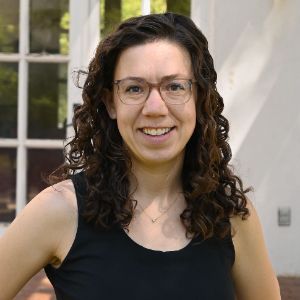
Dr. Kate Hartmann
Assistant Professor of Religious Studies in the Department of Philosophy and Religious Studies, University of Wyoming
Dr. Hartmann’s primary research focus is the intellectual history of pilgrimage in Tibet, as well as Buddhist ethics and Buddhist approaches to addiction and recovery. She is the author of Making the Invisible Real: Practices of Seeing in Tibetan Pilgrimage Literature (Oxford University Press, 2025).
She received her PhD in Buddhist Studies from Harvard University (2020), an MA in the History of Religions from the University of Chicago (2013), and a BA in Religious Studies from the University of Virginia (2011). As part of her training, Dr. Hartmann has spent extended periods living and conducting research in Asia—living with Tibetan Buddhist nuns in Ladakh, working at the Library of Tibetan Works and Archives in Dharamsala, studying at the Dunhuang caves in China, travelling to Lhasa, and conducting research around Boudha in Nepal. She speaks modern colloquial Tibetan and conducts research in Classical Tibetan and Sanskrit.
As a scholar and teacher, Dr. Hartmann is interested in the practices religions develop to transform people’s experience of the world. She aims to help students engage Buddhist traditions through deep reading of primary sources, embracing the internal diversity of Buddhist thought and practice. She balances an irreverent, down-to-earth approach with deep respect for Buddhist texts, traditions, and practitioners.
Enrollment is now OPEN
Stay Informed
Sign up for the Yogic Studies mailing list to find out first about upcoming courses, podcast episodes, promotions, events, and the latest research delivered straight to your inbox.